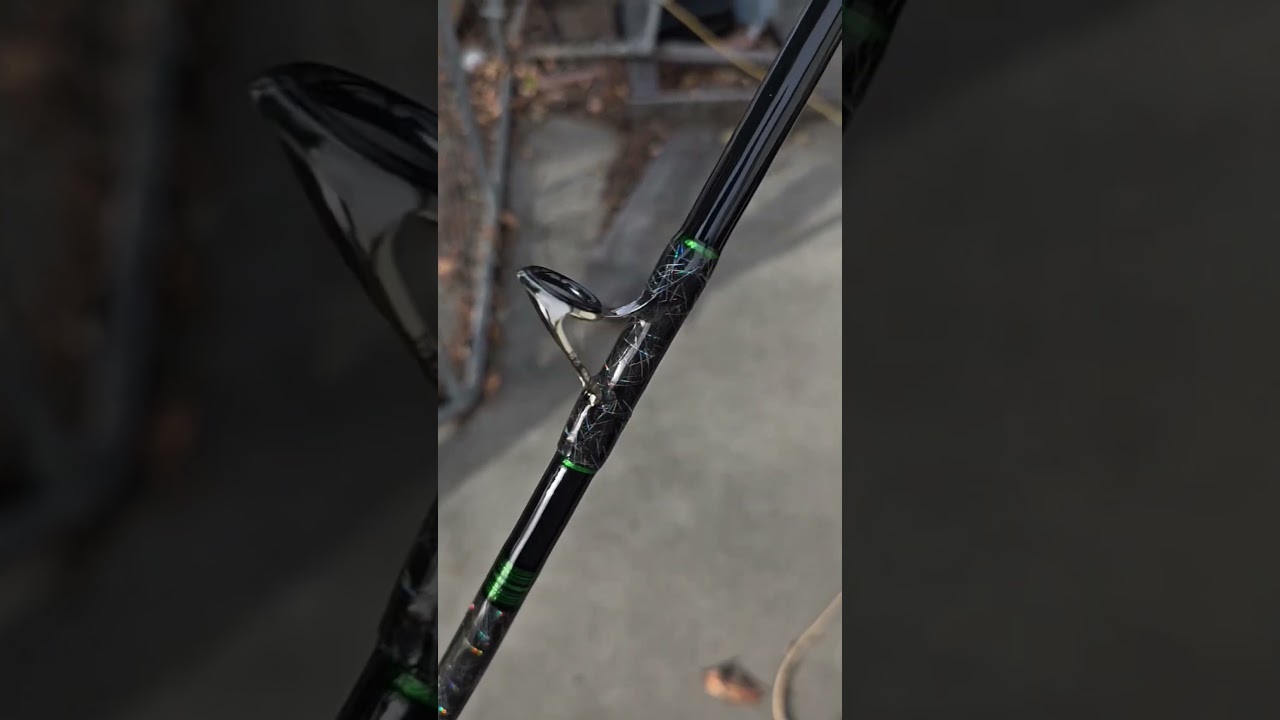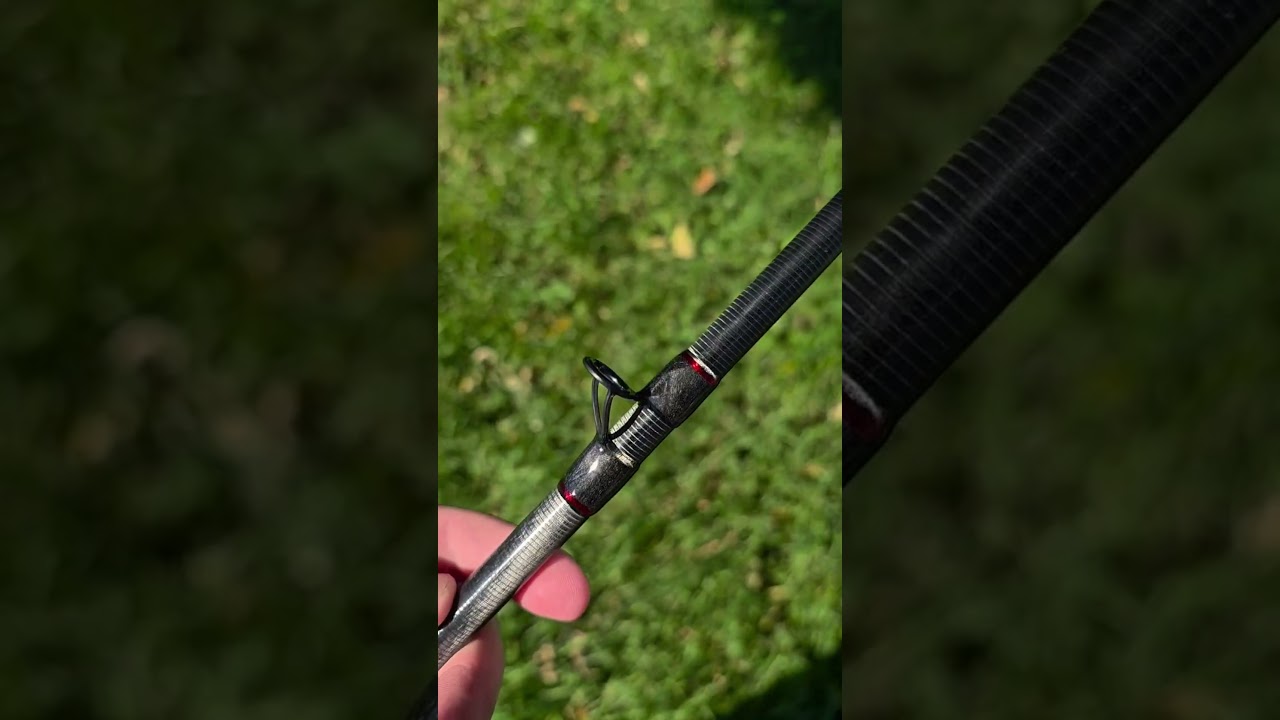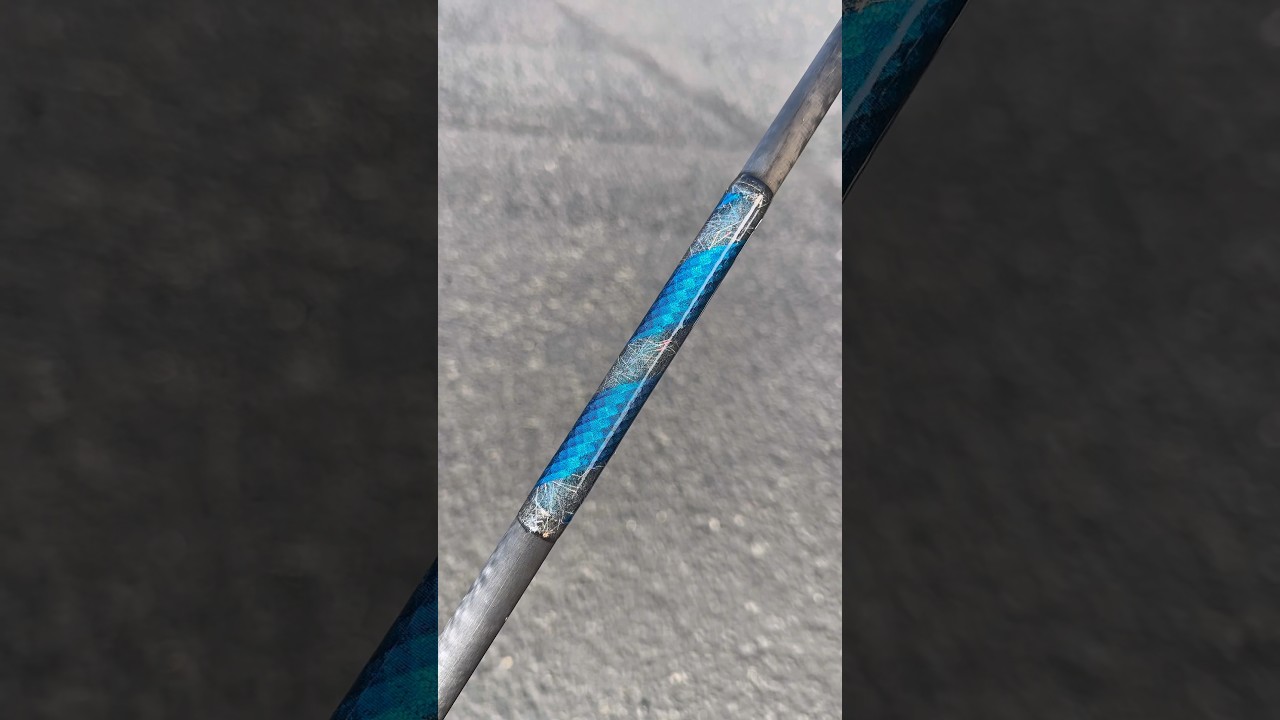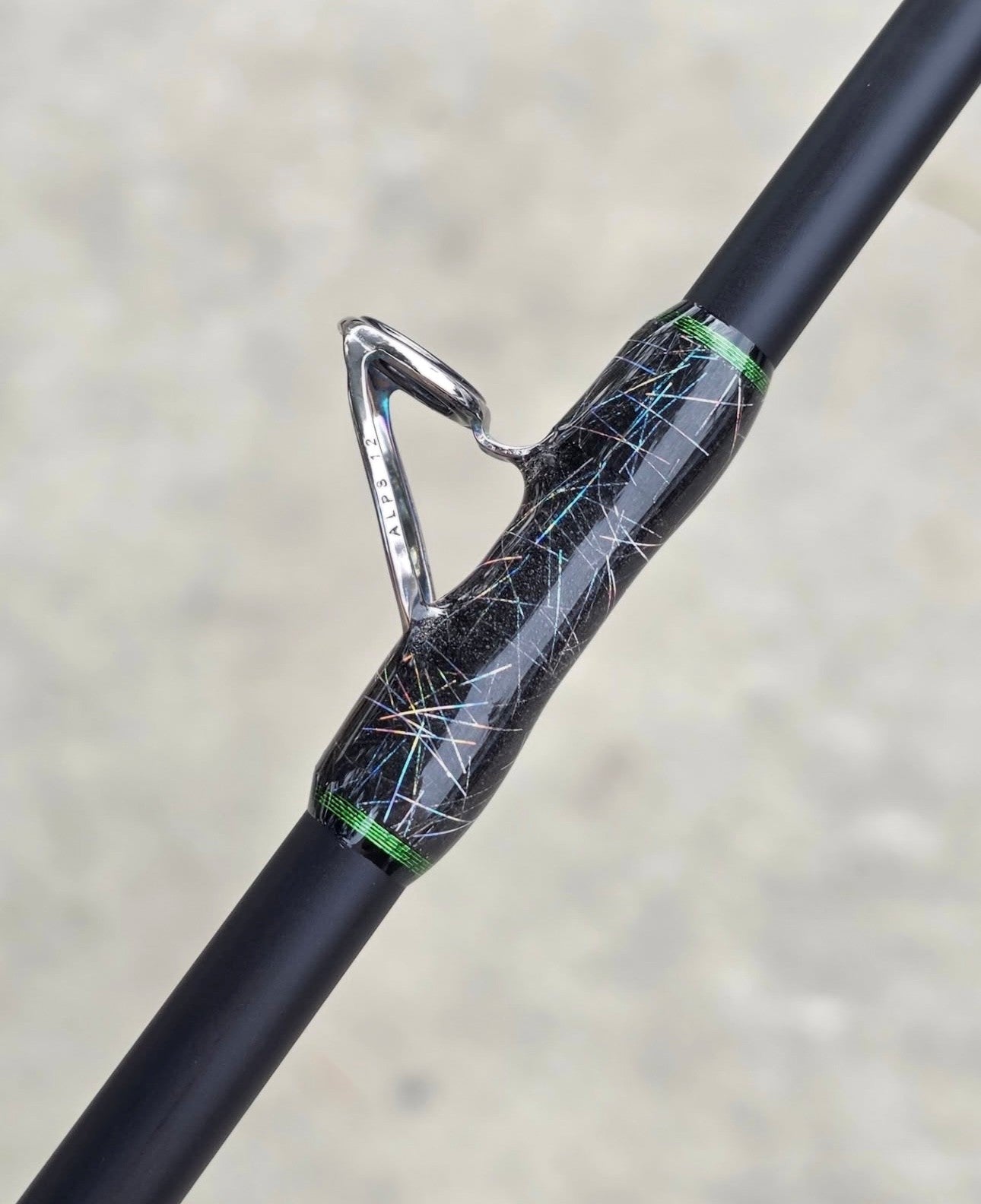
Air Carbon Mesh: Expanding the Possibilities of Guide Wrapping
For generations, rod builders have followed a process that has stood the test of time—wrapping guides with silk, nylon, or polyester thread, carefully packing each turn, and finishing with epoxy to lock everything in place. It’s a craft built on precision, patience, and tradition.
And that tradition isn’t going anywhere.
But every so often, a new material comes along that adds to the builder’s toolkit—offering a different way to approach the same goal.
That’s exactly what Air Carbon Mesh (ACM) represents.
From Silk to Synthetic — A Foundation of Craftsmanship
Historically, rod builders used silk thread for its fine diameter and classic finish. Over time, nylon and polyester threads became the standard, offering improved durability, color retention, and consistency.
Thread wrapping remains:
- Proven
- Versatile
- Highly customizable
It’s still the preferred method for many builders, especially when decorative wraps and custom aesthetics are the priority.
But it’s also true that:
- It takes time to master
- It can be labor-intensive
- Consistency depends heavily on technique
That’s where new materials like ACM begin to offer another option.
Enter Air Carbon Mesh — A New Option from Gary Loomis & NFC
Air Carbon Mesh, developed by Gary Loomis and the team at North Fork Composites (NFC), isn’t about replacing thread—it’s about giving builders another way to get the job done.
And the response has been nothing short of remarkable:
- 150+ million video views across platforms
- Tens of thousands of comments from builders worldwide
- Tens of thousands of sheets sold in a short time
It’s rare to see a rod building material generate this kind of excitement—but ACM clearly struck a nerve.
What Is Air Carbon Mesh?
At its core, Air Carbon Mesh is:
A structured arrangement of carbon fiber strands formed into a mesh, combined with a permeable adhesive web.
This design is what sets it apart.
Key Features:
-
Open Mesh Structure
The carbon fibers are arranged to create visible pores throughout the material. -
Integrated Adhesive Web
A binder holds everything together while maintaining permeability. -
Engineered for Epoxy Flow
The mesh allows epoxy to pass through and reach the guide foot and blank, which is critical for a proper bond.
Unlike traditional thread, where epoxy saturation depends on technique, ACM is designed to make consistent penetration easier to achieve.
Why Permeability Still Matters
No matter the material, the goal is the same:
A secure, durable bond between the guide, the wrap, and the blank.
With thread:
- Builders rely on careful application to ensure proper saturation
With ACM:
- The open structure helps epoxy flow through naturally
- It promotes a more uniform bond with less guesswork
Both approaches work—ACM simply offers a different path to the same end result.
Speed and Accessibility
One of the biggest advantages builders notice right away is efficiency.
With Air Carbon Mesh:
- Wrapping guides can take significantly less time
- There’s less dependence on perfect thread technique
- Results are often more consistent, especially for newer builders
Instead of managing dozens of thread wraps, the process becomes:
- Position
- Wrap
- Activate
- Finish
For experienced builders, this can speed up production.
For newer builders, it can make guide wrapping far more approachable.
Strength Where It Counts
Another unique aspect of ACM is the material itself.
Rather than thread, you’re working with carbon fiber—the same class of material used to build the blank.
That brings:
- High tensile strength
- Excellent stiffness-to-weight properties
- Reinforcement directly at the guide foot
In many applications:
The blank will fail before the Air Carbon Mesh wrap does.
It’s not about replacing thread—it’s about offering a structurally robust alternative when that’s the priority.
Understanding the Role of Color Preserver (CP)
One area where ACM requires a shift in thinking is Color Preserver (CP).
Traditionally:
- CP is used to seal thread
- Prevent color changes from epoxy
So it’s natural to assume it would limit penetration.
With ACM, it actually plays a different role.
What Happens with ACM:
- CP interacts with the adhesive binder in the mesh
- A chemical reaction occurs
- This helps open the pores further, improving permeability
This can feel counterintuitive at first—but it’s key to getting the best results.
ACM is carbon fiber, not nylon or polyester, and it behaves accordingly.
A Thoughtful Design Choice
Rather than introducing a new proprietary activator, NFC chose to use something builders already have:
- Color Preserver
This keeps the process:
- Familiar
- Accessible
- Easy to integrate into existing workflows
If CP isn’t available, Minwax Polycrylic can be used as a substitute, followed by your preferred rod finish epoxy.
Performance Benefits
Beyond ease of use, ACM offers some compelling performance characteristics:
-
Lightweight Construction
Carbon fiber replaces traditional thread mass -
Improved Sensitivity
Less weight and more direct energy transfer -
High Durability
Strong wraps at high-stress points -
Modern Aesthetic
A clean, technical look that stands apart from traditional wraps
A New Tool — Not a Replacement
Air Carbon Mesh doesn’t replace thread—it complements it.
There will always be a place for:
- Decorative thread work
- Traditional craftsmanship
- Custom color and pattern expression
ACM simply offers another option:
- Faster when needed
- Strong where it matters
- Consistent across builds
It gives builders more flexibility to choose the right approach for the job.
Final Thoughts
Air Carbon Mesh represents an evolution in rod building—not a departure from its roots.
It respects the craft, while offering a new way to approach it.
With 150 million views, massive engagement, and rapid adoption, it’s clear that builders are excited—not because it replaces what they know, but because it expands what’s possible.
In the end, that’s what great innovations do.
They don’t take tools away—they add better ones to the bench.
You can find Air Carbon Mesh and Holographic Air Carbon Mesh Here:
Regular Air Carbon Mesh:
Holographic Air Carbon Mesh:
Holographic Metallic Lavender Air Carbon Mesh:
Holographic Metallic Red Air Carbon Mesh:
Holographic Metallic Gold Air Carbon Mesh:
Here are some amazing videos of Air Carbon Mesh: